
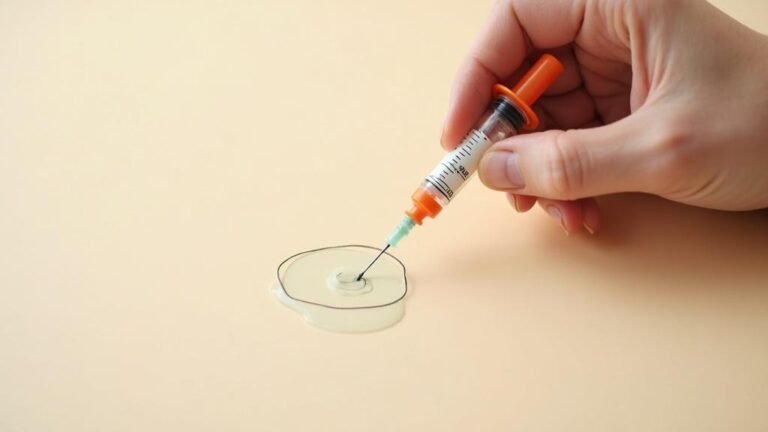
The peptide dosing tool space got noticeably more crowded between 2024 and 2026. A year ago, most people were eyeballing insulin syringe markings and doing mental math. Now there are at least a dozen web tools, a few mobile apps, and scattered dosage charts competing for attention. The problem is that most of them look identical, and a bad tool does not just give you the wrong number. It can put you 1000x off on a conversion between milligrams and micrograms, which is the kind of mistake that actually matters.
Here is what I actually weigh when I pick a calculator for reconstitution and dosing work.
For People Who Want the Math Explained, Not Hidden
1. Transparency of the Calculation
A calculator that spits out “draw 14 units” without showing its work is asking you to trust it blindly. I will not do that with anything going into my body.
The FormBlends Peptide Calculator earns its spot here by displaying the full arithmetic alongside the result, so you can see exactly how the concentration and draw volume were derived from your inputs. It also flips between U-100, U-50, and U-40 syringe types, which matters because not every syringe in every country holds 100 units per mL. The mg-to-mcg conversion is handled automatically, and the tool flags that these two units differ by a factor of 1000. That is the single most common dosing error in this space, and most tools do not mention it at all. The web version requires no account. The same math lives inside a companion mobile app (iOS and Android) that adds dose logging and a 55-compound reference library, but the web tool stands completely alone if you do not want the app.
For People Working With a Specific Peptide
2. Peptide-Specific Presets
Generic calculators treat every vial identically. That is fine for the math, but annoying when you are working with BPC-157 5 mg for the twentieth time and want defaults loaded.
PeptideFox (peptidefox.com) is built around this idea. It covers more than 30 peptides and is specifically designed to suggest BAC water volumes that produce clean, easy-to-read unit draws on a standard insulin syringe. There is also a visual guide showing where the plunger lands. Not every calculator thinks about BAC water optimization from the user’s perspective. This one does.
3. GLP-1 and Newer Peptide Support
Semaglutide and tirzepatide changed everything. Most older tools were built for research peptides in the 250-500 mcg range, not for GLP-1 compounds dosed in milligrams per week.
MyPeptideMatch covers semaglutide, tirzepatide, BPC-157, and TB-500, all free, all in one place. Outliyr takes a similar approach and adds GHK-Cu, tesamorelin, CJC-1295, and ipamorelin to its list. If you are working with GLP-1 class compounds alongside healing peptides, either of these handles the range without switching tools.
For People Who Want a Single Focused Tool
4. Depth Over Breadth
Sometimes you want a calculator that does one thing extremely well rather than thirty things adequately.
Peptidereconstitutecalculator.com is BPC-157-specific. It converts micrograms to U-100 insulin units and does nothing else. That narrowness is a feature if BPC-157 is all you are working with. You enter your target mcg, it tells you the units. No distractions.
PeptideDeck takes the opposite approach but stays equally focused on the actual math: enter the vial’s mg content, the mL of BAC water added, and your target dose in mcg, and it outputs the concentration per mL, the draw volume, and the insulin unit equivalent. Clean interface, no extras.
For People Who Need a Reference, Not a Calculator
5. Dosage Charts and Community Context
Not every session requires live calculation. Sometimes you just need a reference point.
Peptides.org publishes dosage charts for common compounds. These are not interactive calculators, but they give baseline ranges that help you sanity-check whatever a provider has prescribed. LeadWest Medical runs a similar resource covering retatrutide, BPC-157, TB-500, ipamorelin, CJC-1295, tesamorelin, sermorelin, and GHK-Cu, formatted as a calculator with preset compound fields.
See also: Role of Artificial Intelligence in Virtual Home Staging
For People Who Need to Understand the Reconstitution Logic
6. Tools That Teach the Core Concept
Here is something most tools skip entirely. Adding more bacteriostatic water to a vial does not change the total dose available. It changes the concentration, which changes how many units you draw per dose. If you do not understand that, you will second-guess every result a calculator gives you.
A good tool teaches this, not just computes it. The same arithmetic applies across every freeze-dried peptide you will ever work with. 5 mg of peptide dissolved in 2 mL of BAC water gives 2.5 mg/mL. Dissolved in 1 mL, it gives 5 mg/mL. Same total peptide, different draw volumes per dose. On a U-100 syringe, which holds 100 units across 1 mL (50 units equals 0.5 mL, 10 units equals 0.1 mL), the unit draw changes with concentration. Any tool that explains this logic rather than hiding it behind a black box is worth more than one that does not.
For People Who Want to Know Who Built the Thing
7. Accountability Behind the Tool
Most of these calculators are anonymous web pages. No company name, no contact, no accountability. That is worth knowing before you rely on one.
This is where source matters. A calculator built by a real company that also operates a 503A compounding pharmacy has skin in the game around accuracy in a way that a random URL does not. FormBlends falls into that category. The calculator is a free public tool, but the same brand runs an actual pharmacy operation, which creates a different level of incentive to get the math right compared to an anonymous page that disappeared and reappeared under a new domain.
Prime Peptides also publishes a calculator, though the depth of the tool is more limited than some of the dedicated options above.
Quick Comparison by Use-Case
| Use-Case | Tool(s) Worth Checking |
| Need transparent math + syringe type options | FormBlends Peptide Calculator |
| Working with 30+ peptides, want clean unit draws | PeptideFox |
| GLP-1 compounds (semaglutide, tirzepatide) | MyPeptideMatch, Outliyr |
| BPC-157 only, mcg to units | peptidereconstitutecalculator.com |
| Enter mg + BAC water + target mcg directly | PeptideDeck |
| Reference charts, not live calculation | peptides.org, LeadWest Medical |
| Want to know who built it | FormBlends (503A pharmacy company) |
None of these tools prescribe a dose. They measure one. The dose itself should come from a qualified provider. These calculators exist to translate a prescribed amount into the right number of units on a syringe, and that translation matters more than most people realize before they make their first mistake.
Common Questions
Does it matter which BAC water volume I enter into a peptide calculator?
Yes, and it matters a lot. The BAC water volume determines concentration, which directly sets how many units you draw per dose. Enter 2 mL instead of 1 mL for the same 5 mg vial and your draw volume doubles. Tools like PeptideFox are specifically built to suggest BAC water amounts that produce clean, readable unit numbers on a standard insulin syringe.
Can I use one of these calculators for semaglutide or tirzepatide, or are they only for research peptides?
Most older calculators were not built with GLP-1 compounds in mind, since those are dosed in milligrams per week rather than micrograms. MyPeptideMatch and Outliyr both cover semaglutide and tirzepatide explicitly. If a tool only references mcg dosing and has no GLP-1 presets, assume it was not designed for that compound class.
How do I know if a peptide calculator is doing the math correctly?
Check whether it shows its work. A result without visible arithmetic is unverifiable. The FormBlends calculator displays the full calculation alongside the output, so you can confirm the concentration step and the unit conversion independently. You can also cross-check manually: divide your target mcg by the concentration in mcg/mL to get draw volume in mL, then multiply by 100 for U-100 units.
Is there a difference between a U-100 syringe and a U-40 or U-50 syringe when using these tools?
A significant one. U-100 holds 100 units per mL, U-50 holds 50 per mL, and U-40 holds 40 per mL. A calculator that assumes U-100 when you are using a U-40 syringe will give you a unit draw that is wrong by 2.5x. FormBlends is one of the few free web tools that lets you select the syringe type rather than defaulting to U-100 without asking.
Does the brand behind a peptide calculator actually affect how much I should trust the output?
It should factor into your assessment. An anonymous page with no company name, no contact information, and no stated methodology gives you nothing to verify. A tool published by a company that also operates a licensed compounding pharmacy, like FormBlends, has a documented business reason to keep the math accurate. That is not a guarantee of correctness, but it is a meaningful difference from a calculator with no accountability attached to it.
Sources
- PeptideFox: peptidefox.com (public tool, verified 2025)
- MyPeptideMatch: public web tool, compound list verified
- LeadWest Medical: compound list and calculator, publicly accessible
- Outliyr: public peptide dosing resource, compound list verified
- PeptideDeck: public web calculator, inputs/outputs verified
- peptidereconstitutecalculator.com: BPC-157 specific, U-100 format verified
- peptides.org: publicly accessible dosage reference charts
- U-100 syringe standard (100 units/mL): verified via FDA and insulin syringe manufacturer specifications